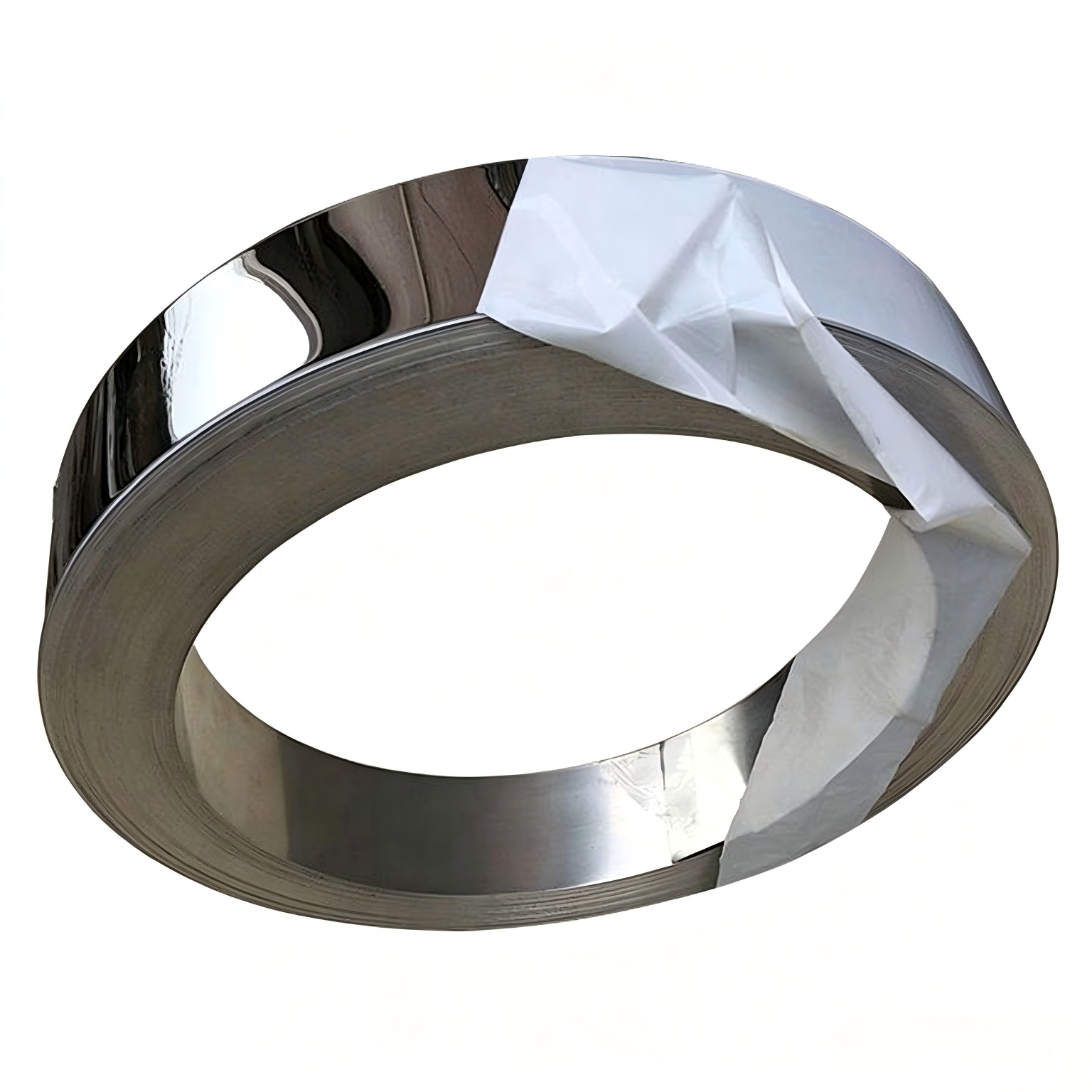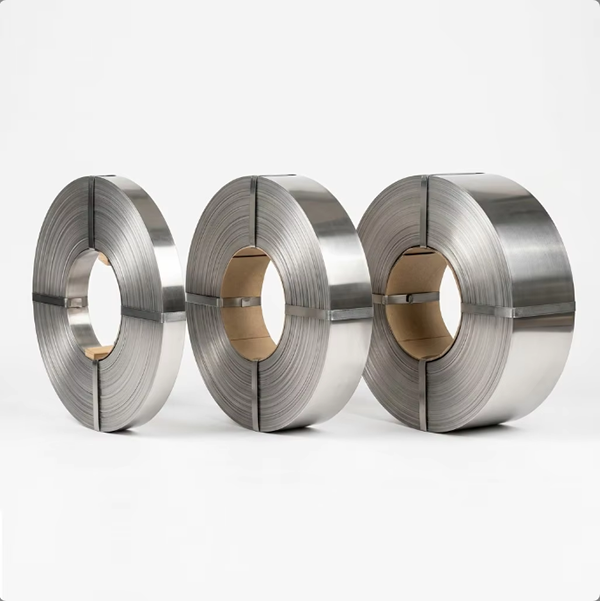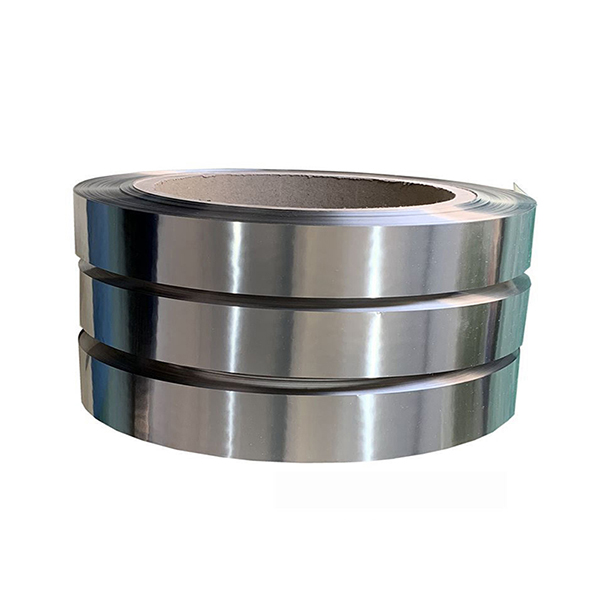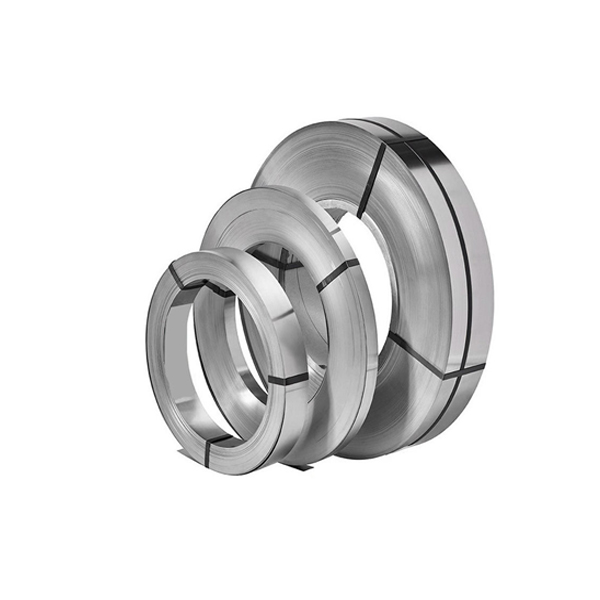
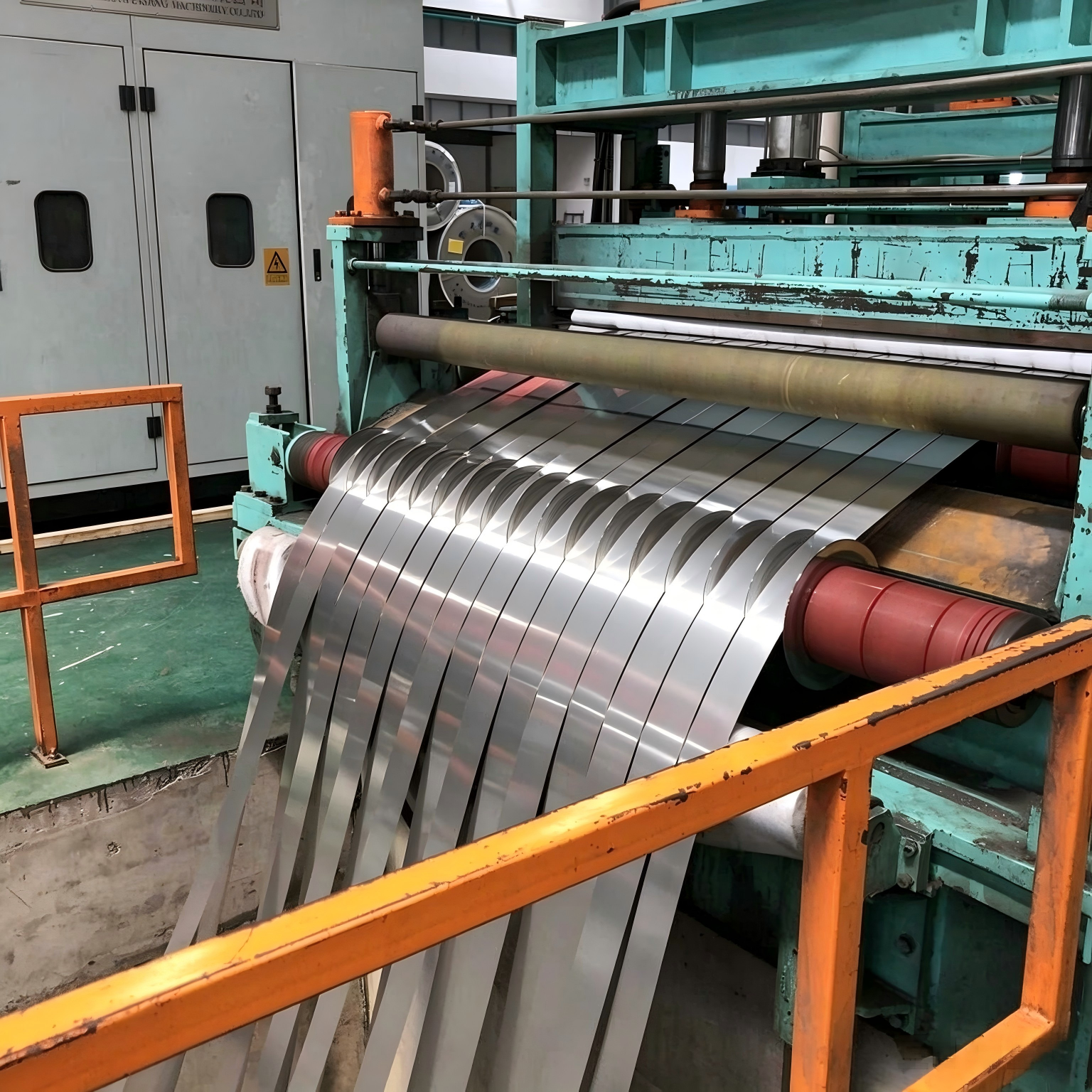
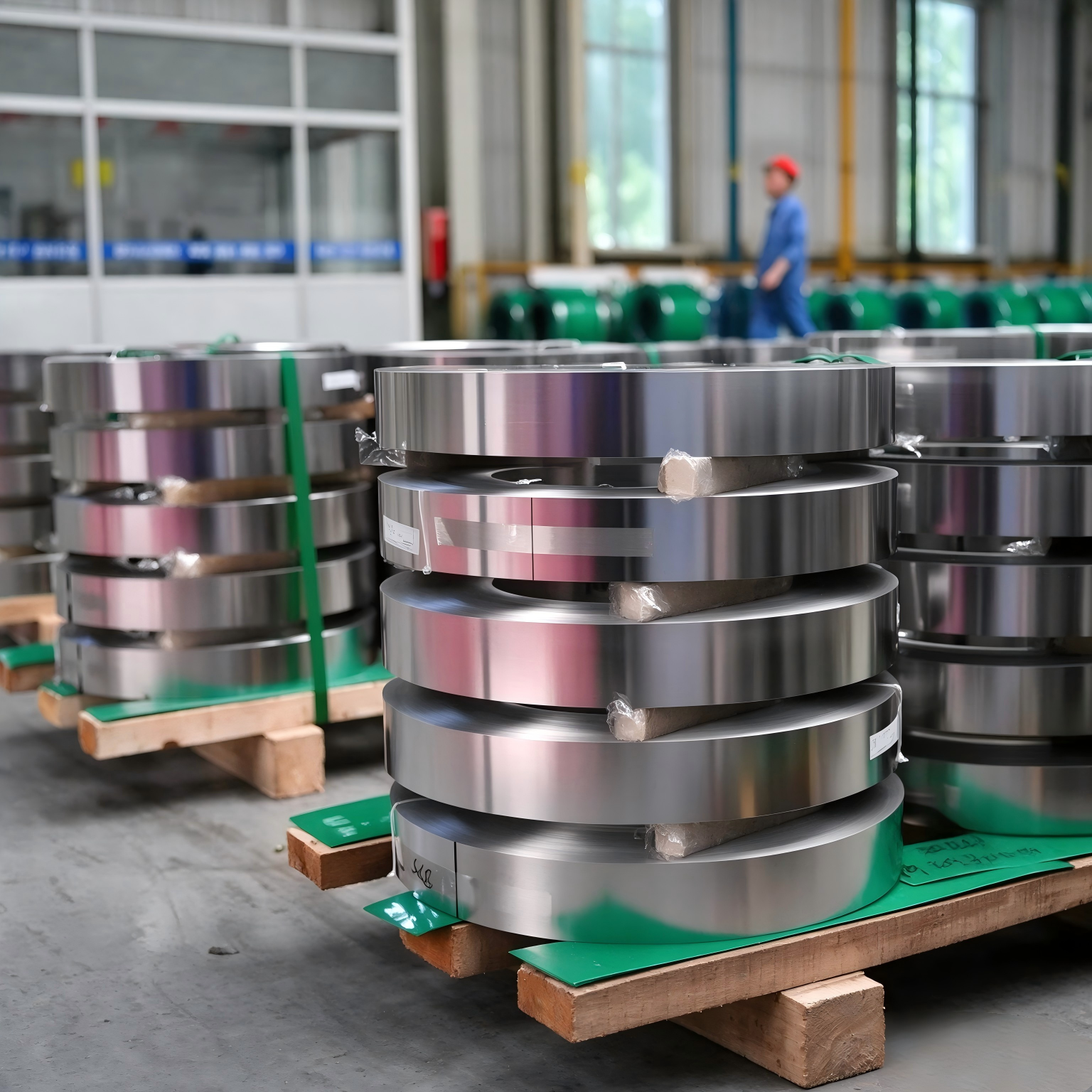
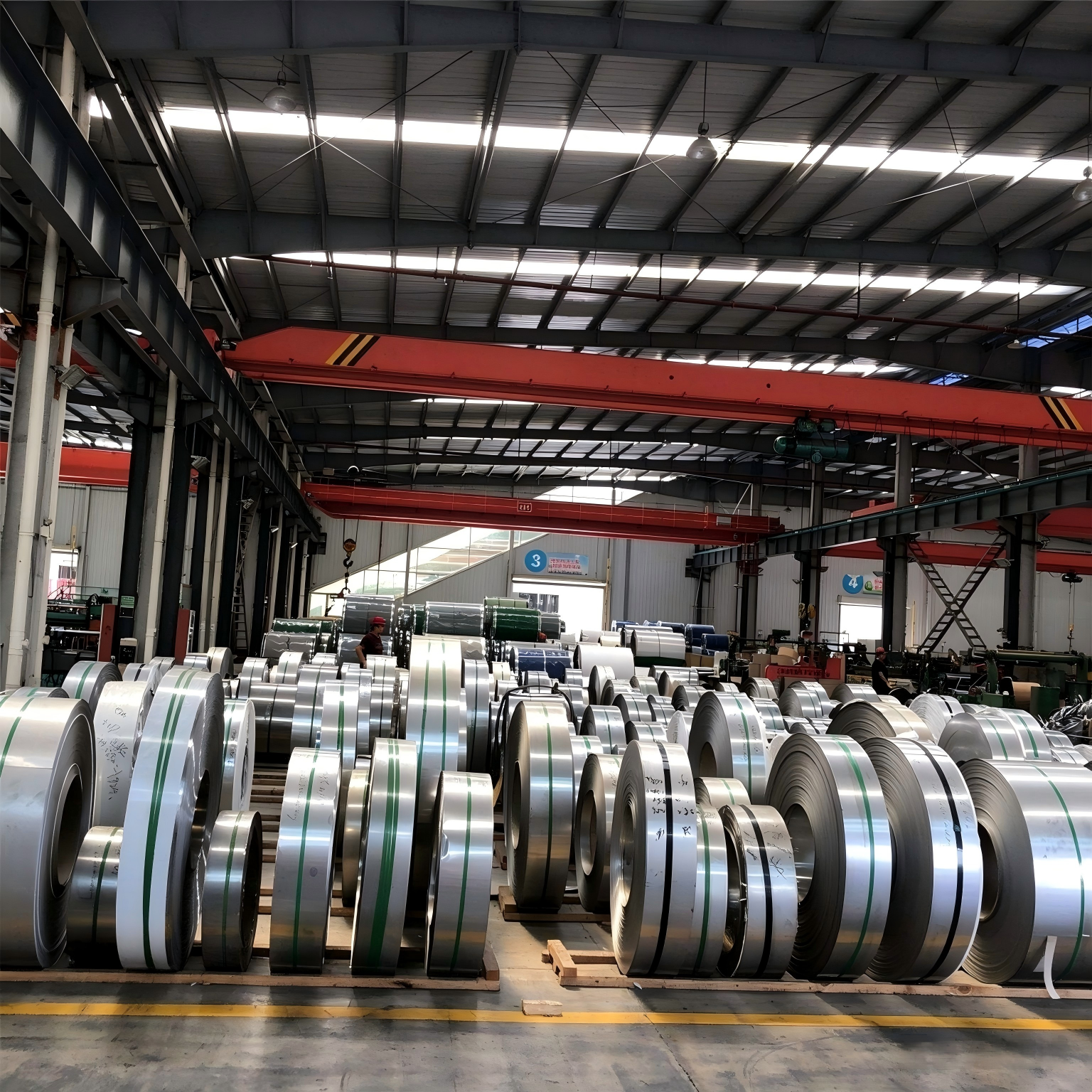


420 Stainless Steel Strip — Hardened & Tempered for High Hardness Applications
What is 420 stainless steel strip?
420 is a martensitic stainless steel (AISI/UNS S42000, EN 1.4021) containing approximately 12–14% chromium and 0.16–0.40% carbon. It is hardenable by heat treatment and is supplied in the hardened and tempered condition for applications requiring high hardness and wear resistance. Our strip achieves a hardness range of 50–55 HRC after quenching and tempering, depending on thickness and tempering temperature.
International grade equivalents
| Standard | Designation |
| AISI / UNS | 420 / S42000 |
| EN | 1.4021 (X20Cr13) / 1.4034 (X46Cr13) |
| JIS | SUS420J1 / SUS420J2 |
| GB | 20Cr13 / 30Cr13 |
Note: JIS SUS420J1 has a lower carbon range (better ductility and polishability), while SUS420J2 has a higher carbon range for higher achievable hardness . Specify the variant that matches your hardness and toughness requirements.
Heat treatment condition
Our 420 strip is quenched and tempered. Typical hardening process: austenitize at 980–1050°C, oil or air quench, then temper at 150–370°C to achieve the target hardness . The result is a combination of high hardness, good wear resistance, and moderate corrosion resistance in mild environments.
Typical applications
Knife blades, scissors, and cutlery
Surgical and dental instruments
Valve seats and pump shafts
Bearing components and wear parts
Fasteners and precision mechanical components
Why choose our 420 strip?
Consistent hardness across coil length
Tight thickness tolerance (specify your standard, e.g., ±0.01mm)
Available in 2B / BA finish
Width range: 3–450mm (adjust to your actual capability)
Thickness range: 0.1–3.0mm (adjust to your actual capability)
Full traceability with EN 10204 3.1 certificate
FAQ
Can 420 stainless steel strip be welded?
Yes, but with precautions. Preheat to approximately 200°C and perform post-weld tempering to avoid cracking. Filler metals E410, E420, or E309 (for dissimilar joints) are recommended . Not ideal for complex weld assemblies.
What is the difference between 420, 420J1, and 420J2?
All are martensitic and heat-treatable with 12–14% Cr. The difference is carbon content: 420J1 has lower carbon for better ductility and polishability; 420J2 has higher carbon for higher hardness (suitable for blades and cutters) . Base 420 falls between these variants.
Is 420 stainless steel magnetic?
Yes. 420 is magnetic in all conditions due to its martensitic structure .
What is the corrosion resistance of 420 compared to 304?
420 has lower corrosion resistance than 304 due to its higher carbon content. It performs well in fresh water, steam, and mild atmospheres, but is not recommended for highly corrosive environments. Polishing and passivation improve its corrosion performance.
Can 420 strip be supplied in the annealed condition?
Yes, if you require formability for stamping or machining before hardening, request the annealed condition. Annealing is performed at 815–900°C with slow furnace cooling